Key Takeaways
Fine line cartridge selection depends on more than needle count. Gauge, taper, grouping, machine response, membrane behavior, and the artist’s hand all affect the result.
- 0803RL and 1003RL configurations suit exceptionally fine, controlled marks.
- 1203RL and 1205RL options provide more visible lines without leaving precision behind.
- Five-round groupings offer a practical middle ground for detail, lettering, and versatile outlines.
- Seven-round liners support medium-fine lines, detail work, and measured variation.
- Universal fit, membrane stability, hygiene controls, and documented compliance belong in the final check.
1. 0803RL cartridges for ultra-fine single-needle lines
An 0803RL uses three needles in a round-liner grouping with a relatively small diameter. For artists working in micro-details, delicate botanical contours, or restrained PMU-related linework, it can provide a narrow visual footprint when the hand and machine are already well controlled. It is not automatically the best choice for every fine line tattoo; the skin, pigment, stretch, and desired healed weight still govern the decision.
The 04 designation refers to a smaller needle diameter than common 06 or 08 options. That difference can make the mark look finer, but it also leaves less room for error. Excessive hand speed, insufficient stretch, or an inconsistent machine stroke can produce a weak or broken line rather than an elegant one. Artists should test the cartridge at the intended voltage and movement speed before beginning a client procedure.
An 0803RL is best treated as a precision instrument, not a universal default. It may suit small accents and single-pass details, while larger outlines often benefit from a 06 or 08 gauge configuration. The fine line cartridge guide offers a useful framework for comparing diameter, gauge, taper, and grouping before committing to a setup.
2. 1003RL cartridges for controlled fine line work
A 1003RL places three needles in a 06-gauge range, giving the artist slightly more presence than an 04 configuration while retaining a narrow round-liner grouping. It is a practical option for controlled fine line work where the design needs to remain delicate but still read clearly after healing. The additional diameter can also feel more predictable in the hand than an ultra-fine setup.
The cartridge should be matched to the line’s intended role. A 1003RL may work for small lettering, light contours, and fine illustrative structures, but it should not be forced into long, heavily saturated outlines simply because the grouping is tight. Skin preparation, skin tension, pigment viscosity, and machine give all influence whether the line arrives evenly.
Artists comparing the best cartridges for fine line tattoos should assess the finished mark rather than relying on the code alone. Needle arrangement, taper length, tip visibility, and membrane response can change the working feel between otherwise similar configurations. A short practice pass on synthetic skin can reveal whether the cartridge starts cleanly and tracks comfortably at the chosen hand speed.
3. 1203RL cartridges for cleaner, more visible outlines
A 1203RL uses three needles in an 08-gauge range, producing a line with more visual weight than 0803RL or 1003RL options. This makes it useful when a fine outline must remain legible across a small design without becoming a bold traditional line. The configuration still rewards a restrained technique, particularly on thin or highly mobile skin.
The larger diameter does not remove the need for a careful pass. If the artist slows excessively or overloads the area, the line can become heavier than the stencil suggests. Conversely, a controlled hand with appropriate machine settings can use the 1203RL for crisp contours, selective structure, and small designs that need a little more definition.
The most reliable comparison is made across the full configuration: gauge, taper, needle alignment, and the cartridge’s tip and membrane behavior. A useful round liner collection can help an artist compare available RL groupings while keeping the selection centered on line precision rather than marketing language.
4. 0805RL cartridges for delicate detail and small lettering
An 0805RL combines five needles with an 04 diameter, creating a compact grouping for delicate detail. Compared with a three-round liner, it can place a slightly broader yet still fine mark, which may help with tiny lettering, repeated decorative strokes, and small ornamental forms. The result depends heavily on how tightly the needles are arranged and how the artist controls depth and movement.
Because the needles are fine, the cartridge can be unforgiving when the design requires repeated passes. Artists should avoid treating a delicate five-round as a substitute for saturation equipment. A clean stretch, a measured pace, and a conservative approach to overlap are more useful than simply increasing machine speed or pressure.
For PMU specialists moving into tattoo work, 0805RL can be an intuitive bridge between isolated hairline-style marks and a more coherent fine outline. It remains essential to separate cosmetic procedures from tattooing protocols, including consent, pigment handling, skin assessment, and local requirements. The configuration is only one part of a professional setup.
5. 1005RL cartridges for versatile fine line tattoos
A 1005RL combines five needles with a 06 diameter and often serves as a balanced choice for artists who move between detail and visible linework. It has more presence than an 04 five-round while remaining considerably more restrained than larger groupings. For that reason, it can suit small illustrative tattoos, moderate lettering, and contours that need consistent readability.
The following comparison keeps the codes practical rather than ranking one cartridge as universally superior. Actual results vary with taper, needle spacing, machine stroke, pigment, skin, and technique.
| Configuration | Gauge reference | Typical working character | Main trade-off |
|---|---|---|---|
| 0803RL | 04 | Very narrow, delicate marks | Less tolerance for inconsistent technique |
| 1003RL | 06 | Controlled fine outlines | May appear too light for highly visible contours |
| 1203RL | 08 | Cleaner, more apparent lines | Can look heavier in compact designs |
| 1005RL | 06 | Versatile fine detail and outlines | Requires careful control on repeated passes |
| 1007RL | 06 | Medium-fine, consistent contours | Less suited to extremely tiny accents |
The table is a starting point, not a prescription. An artist can use the 1005RL when a three-round feels too narrow but a seven-round feels excessive, then adjust taper and machine response to preserve the intended line character. The cartridge anatomy guide is relevant when checking construction details such as needle alignment, housing stability, membrane mechanics, and tip consistency.
6. 1205RL cartridges for slightly bolder precision lines
A 1205RL uses five needles in an 08-gauge range, giving fine line work a more visible edge. It can be appropriate for outlines that must remain readable on their own, especially in small-to-medium designs where a three-round would look too slight. The grouping preserves a precision-oriented format while adding a modest increase in line presence.
The trade-off is density. A five-round with a larger diameter can mark the skin more assertively, so the artist should avoid using it indiscriminately for micro-detail. Line spacing, corner turns, and the amount of ink carried into the tip all deserve attention. A deliberate setup is more likely to produce a clean result than a faster hand used to compensate for the larger grouping.
This configuration can also be useful for artists who want one fine-liner option with enough visibility for the first pass. It should still be evaluated on the intended skin type and design scale. Real in-use photographs of the cartridge and healed work are more informative than stock imagery when an artist is comparing how a 1205RL behaves in practice.

7. 1007RL cartridges for consistent medium-fine outlines
A 1007RL combines seven needles with a 06 diameter, moving beyond the narrowest fine-line configurations into consistent medium-fine outlining. The additional needles can create a more substantial track while remaining suitable for detailed tattoo styles. It may be a sensible option for contours that need continuity and visibility without the broad character of a larger liner.
Seven-round configurations require attention to cornering and line overlap. At tight turns, the artist may need to reduce pressure and manage the machine angle so the grouping does not widen the mark unexpectedly. On longer lines, a stable stretch and a comfortable hand position help prevent changes in apparent weight.
The 1007RL is therefore less about chasing the smallest possible line and more about maintaining a controlled, repeatable outline. Artists who work across multiple design sizes may keep it alongside 1003RL, 1005RL, and 1205RL options, selecting according to the stencil scale and the healed visibility required.
8. 1207RL cartridges for detail, shading, and line variation
A 1207RL uses seven needles in an 08-gauge range and provides a more pronounced medium-fine line than 1007RL. Its grouping can support detailed contours, selective texture, and transitions between fine outlining and restrained shading. It is still a round liner, so it should not be treated as a replacement for a dedicated shader when the design demands broad, soft coverage.
Line variation comes from more than cartridge diameter. The artist’s angle, travel speed, hand pressure, stroke length, and machine movement all alter the visual result. A 1207RL can help create intentional variation, but the artist must preserve consistent depth and avoid repeatedly correcting the same passage.
For artists building a compact cartridge drawer, this configuration may fill the space between delicate five-round work and heavier outlining. A separate fine line tattoo selection can provide visual references for understated designs, but the final cartridge decision should be based on the actual stencil, skin assessment, and the artist’s tested technique.
9. Long-taper round liner cartridges for precision and ink flow control
Long-taper round liners expose a longer needle taper before the point, which can give the artist a finer contact point and more gradual ink delivery. They are often considered when a line needs a delicate start, controlled movement, or reduced visual bluntness. Taper length must be evaluated with the grouping and gauge; it is not an automatic indicator of better performance.
A long taper can change the pace at which pigment reaches the skin. Artists may need to adjust hand speed, machine voltage, and the number of passes to avoid a line that is too faint or uneven. The setup can reward a light, disciplined hand, but it may feel less forgiving for artists who rely on pressure to keep a short-taper line saturated.
Selection should begin with the design’s required line character and then move through the technical variables. This compact checklist keeps the decision grounded:
- Confirm whether the design needs an ultra-fine, fine, or medium-fine visible line.
- Compare 04, 06, and 08 gauge options within the chosen needle grouping.
- Check taper length, tip visibility, needle alignment, and membrane consistency.
- Test the cartridge with the intended machine, pigment, speed, and skin stretch.
The list matters because taper cannot be separated from the rest of the system. A long-taper liner that feels excellent for delicate contours may be inefficient for a short, saturated outline, while a shorter taper may provide a steadier working response for another artist.
10. Bugpin and membrane cartridges for fine line stability and safety
Bugpin terminology generally refers to smaller-diameter needle configurations, often selected for delicate detail and controlled pigment placement. The term should not replace the actual gauge code: artists should verify whether a cartridge is 04, 06, or 08 and confirm the manufacturer’s stated dimensions. “Bugpin” can describe a category, but it does not by itself explain taper, grouping, or needle spacing.
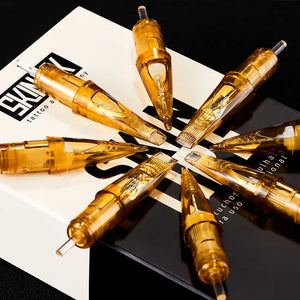
Membrane construction is equally relevant to professional use. A consistent membrane helps isolate the machine’s internal components from ink and body fluids while supporting stable needle movement, but it does not replace single-use practice, aseptic preparation, barrier control, or regulated disposal. Skin Ink USA Fine Line Cartridges are documented as having an anatomical tip design, two internal retention shells, SUS 304 stainless steel, and a universal fit for most tattoo machines; those are the specific features an artist should evaluate rather than assume across every cartridge.
Compliance and purchasing documentation deserve the same care as performance claims. Artists and PMU specialists should verify sterile packaging, lot information, intended use, and applicable regulatory records, including ANVISA documentation where relevant to their market. The needle cartridge safety guide can support a broader review of cartridge types, gauge ranges, and hygienic handling, while the round liner overview is a focused reference for RL selection.
A professional setup also benefits from checking fit before a live procedure. Skin Ink USA Round Liner cartridges are documented as delivering sharp, consistent lines and detailed finishes, with durable SUS 304 stainless steel and smooth ink flow; they are also described as compatible with universal-fit machines. Those claims should be read literally and confirmed against the specific product packaging and machine being used. For broader product comparison, professional cartridge options cover the brand’s documented Fine Line, Round Magnum, Round Liner, Round Shader, and Big Magnum categories.
Conclusion
The best cartridges for fine line tattoos are chosen by matching gauge, grouping, taper, membrane behavior, machine response, and design scale rather than by code alone. Professional artists should test configurations in context, document what works on different skin and styles, and confirm fit, sterile packaging, and applicable compliance requirements before use.
Frequently Asked Questions
Is a 03RL always the best choice for fine line tattoos?
No. A 03RL can create a narrow mark, but a 05RL or 07RL may offer better visibility and control when the design needs a stronger healed outline.
What do 04, 06, and 08 mean in cartridge codes?
They commonly indicate needle diameter groupings, with 04 being finer than 06 and 08. Artists should still verify the manufacturer’s exact specifications.
Should an artist choose a short taper or long taper?
A short taper may feel more direct and saturated, while a long taper can support a finer contact point and gradual ink delivery. The right choice depends on technique, machine, pigment, and design.
Are five-round liners suitable for lettering?
They can be useful for small or moderate lettering when the line needs more presence than a three-round. Letter size, spacing, skin, and the artist’s pace remain decisive.
What is the difference between a bugpin and a standard cartridge?
Bugpin usually describes a smaller-diameter needle configuration, but the term does not specify grouping, taper, or membrane construction. The full code and product documentation should be checked.
Do universal-fit cartridges work with every tattoo machine?
Universal fit generally refers to compatibility with most machines designed for standard cartridge systems, not an unconditional guarantee for every device. The artist should confirm the machine connection and needle give.
How can fine line artists reduce inconsistent results?
They can standardize machine settings, skin stretch, hand speed, pigment choice, and cartridge testing, then evaluate healed work rather than judging only the fresh tattoo.